At Blockchain Futurist Conference 2026, Agnic.AI brought agentic commerce out of the slide deck and into the hands of attendees. Across an interactive workshop, a shared merchant booth, live demonstrations of Shoplin, and an interview with TheStreet, Agnic showed what changes when AI moves beyond answering questions and begins discovering, deciding, and transacting on a user's behalf.
The conference itself reflected a maturing Web3 industry. The centre of gravity had moved away from speculative narratives and toward infrastructure, tokenization, stablecoins, regulation, artificial intelligence, and real-world deployment. Within that shift, the intersection of AI and digital assets emerged as one of the event's most important themes: AI expands what software can do, while blockchain and programmable payments can provide the trust, authorization, auditability, and settlement layers autonomous systems require.
As the buyer increasingly becomes software, commerce needs infrastructure designed for software as an economic actor.

Conference at a Glance
Held at Toronto's Rebel Entertainment Complex and Cabana Pool Bar, the ninth Blockchain Futurist Conference brought together builders, institutions, investors, regulators, and emerging-technology communities across multiple stages and experiential areas. The official 2026 program spanned more than 250 speakers and 150 sessions, with tracks covering AI, payments and stablecoins, real-world assets and tokenization, DeFi, regulation, compliance, and the creator economy.
AI was no longer a side conversation. AI Futurist returned as a major part of the conference, alongside Agentic Day and hands-on experiences designed to make autonomous technology tangible. Across the event, the most consequential conversations were not about whether AI would become more capable, but how quickly autonomous systems would reach production, who would be accountable for their actions, and what infrastructure would make them trustworthy.
The Agentic Commerce Workshop
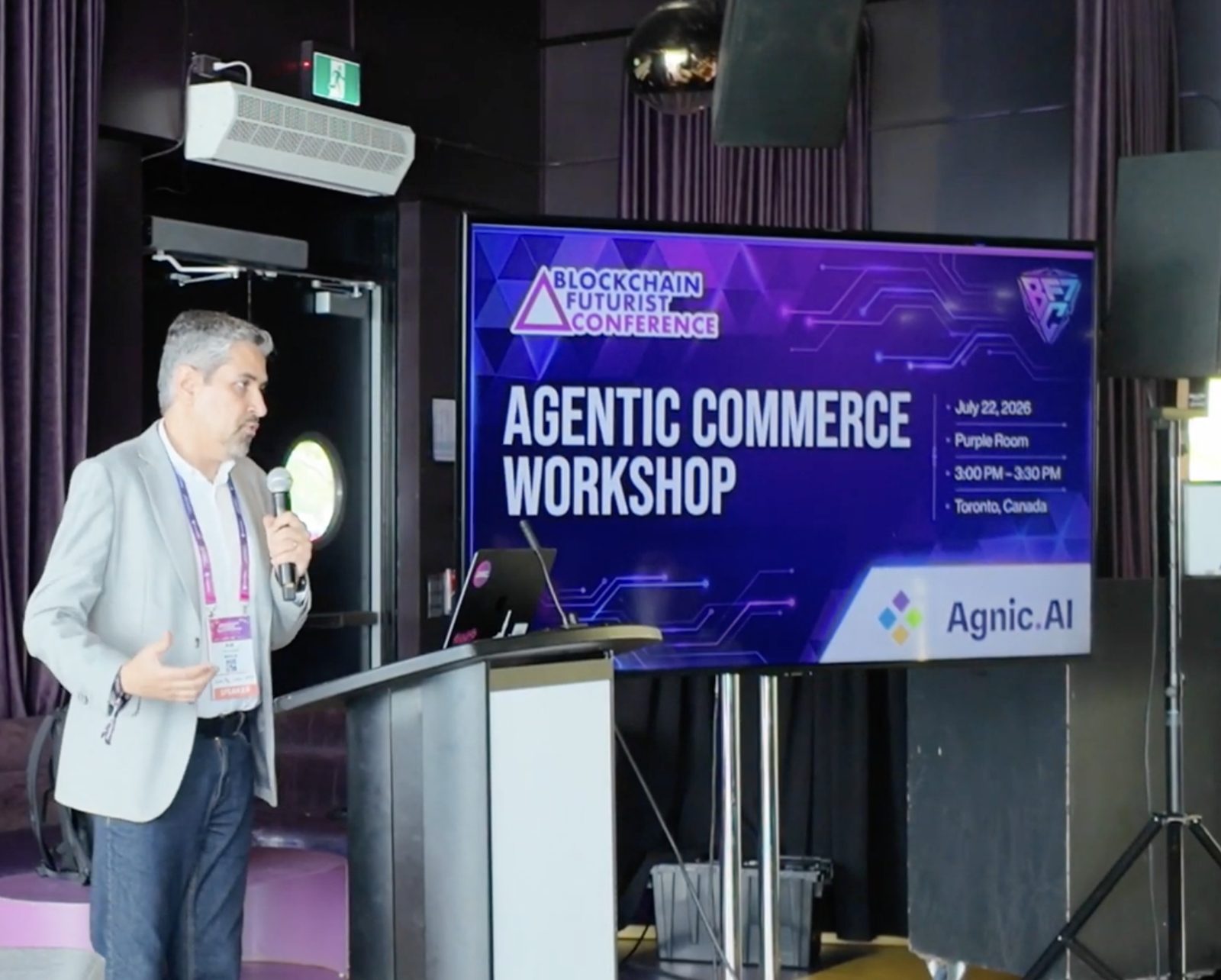
Agnic's Agentic Commerce workshop introduced participants to the transition from conversational AI to transactional AI. The session traced the evolution of AI through three practical stages: answering questions, completing tasks, and acting with increasing autonomy. The key inflection point comes when an AI agent can not only recommend a product or service, but also identify a provider, evaluate an offer, obtain permission, pay, and complete the transaction.
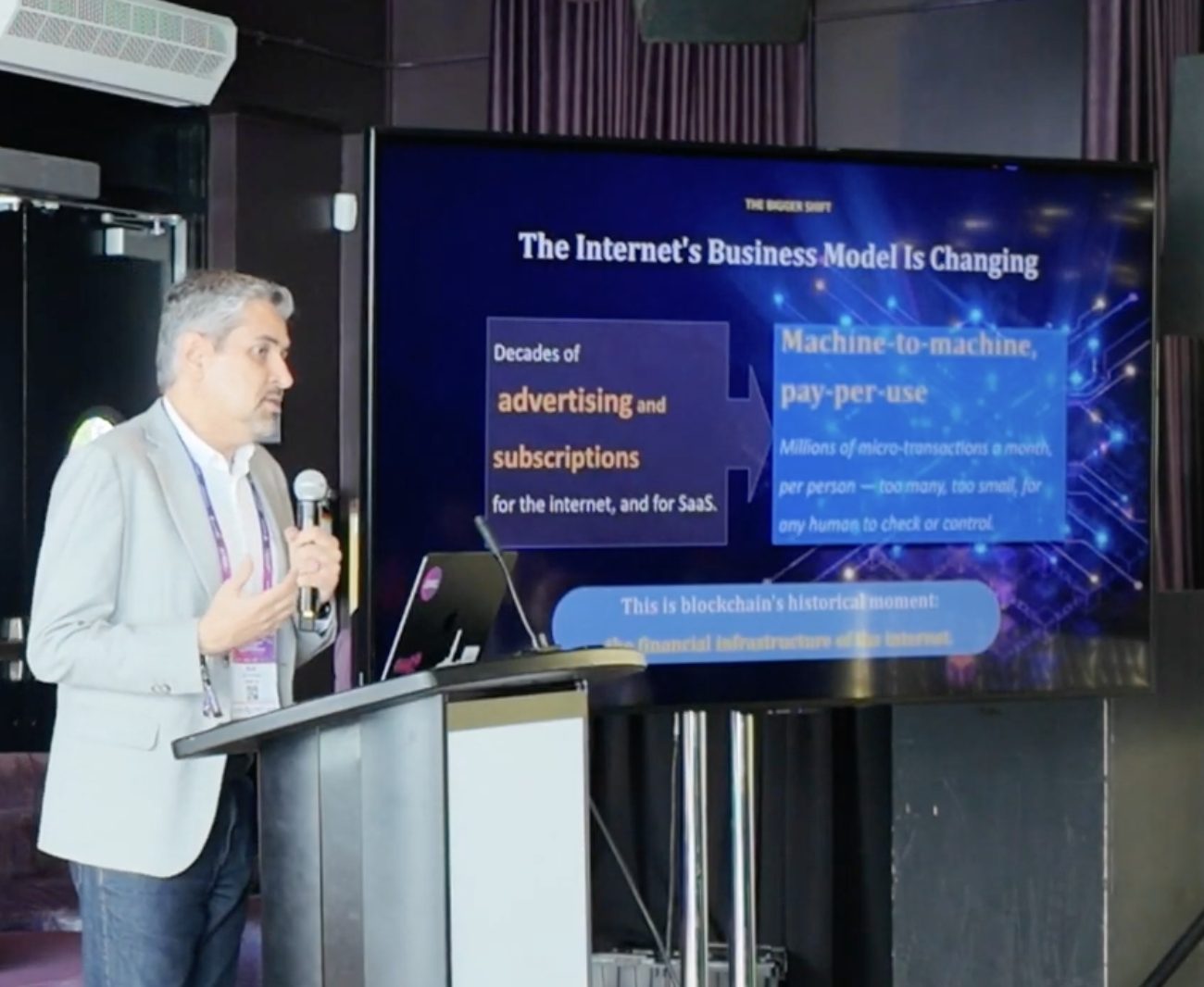
That transition changes the role of software. For decades, the internet's commercial model has depended mainly on humans viewing advertising and paying recurring subscriptions. Autonomous agents do neither particularly well. Instead, they are likely to consume specialized services on demand and make large numbers of small, machine-to-machine payments. This creates an opening for programmable settlement, stablecoins, and blockchain-based payment infrastructure--especially where conventional card economics and account models are poorly suited to high-frequency or very small transactions.
The workshop connected this economic shift to the emerging agentic-commerce stack:
- Agent identity and verifiable credentials, so merchants and services can distinguish legitimate agents from unknown or malicious automation.
- Delegated authority and user mandates, so an agent can prove what it is allowed to do, for whom, within which limits, and for how long.
- Wallets and programmable payment rails, supporting both stablecoin-based machine payments and connections to familiar consumer payment methods.
- Merchant discovery and AI visibility, helping businesses become understandable and selectable by agents--not only searchable by humans.
- Receipts, provenance, and audit trails, creating an accountable record of intent, authorization, execution, and settlement.
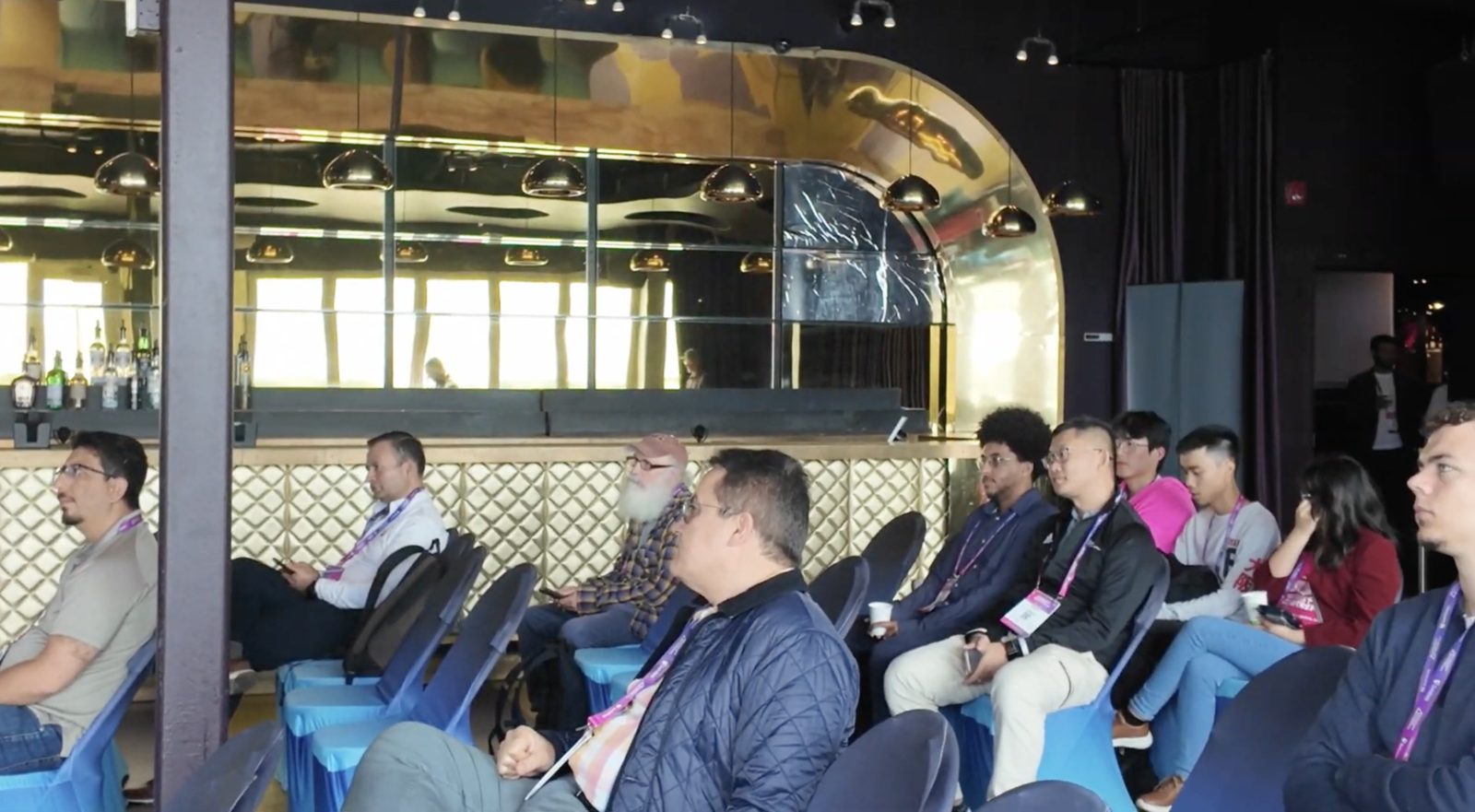
The hands-on format let participants experience the flow from a user's request to agent-assisted discovery and transaction execution. Rather than treating agentic commerce as an abstract forecast, the workshop made its design questions immediate: What can the agent access? How does the user define intent? Which merchant can it trust? How is payment authorized? And who is accountable if the result is wrong?
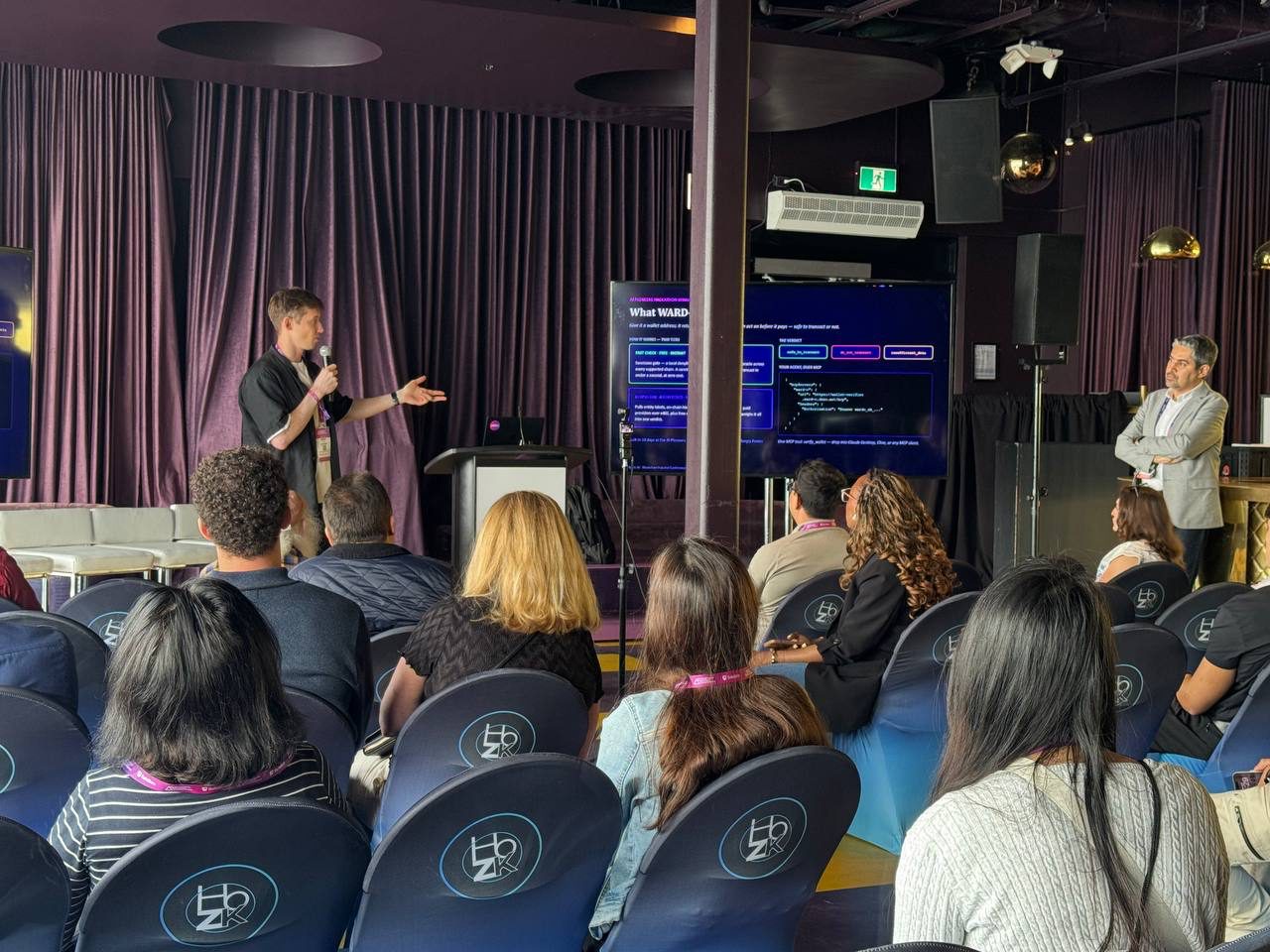
One of the workshop's live examples put the "identity and verifiable credentials" line of the stack into a running service: Ward-O, a wallet risk-checking agent. Point it at an EVM address and it returns a verdict--safe_to_transact, do_not_transact, or insufficient_data--before a transaction goes through. A free sanctions screen runs instantly; a deep check pulls entity labels, on-chain history, and web sentiment for a few cents, paying vetted risk providers per call in USDC over x402. It ships as an MCP server, so any agent gets a single verify_wallet tool instead of trusting a black box. For a workshop about agents that discover, decide, and transact, Ward-O was a concrete answer to the question participants kept asking: how does an agent know who it's paying?
A Booth Shared With the First Canadian Agentic Biscotti Shop
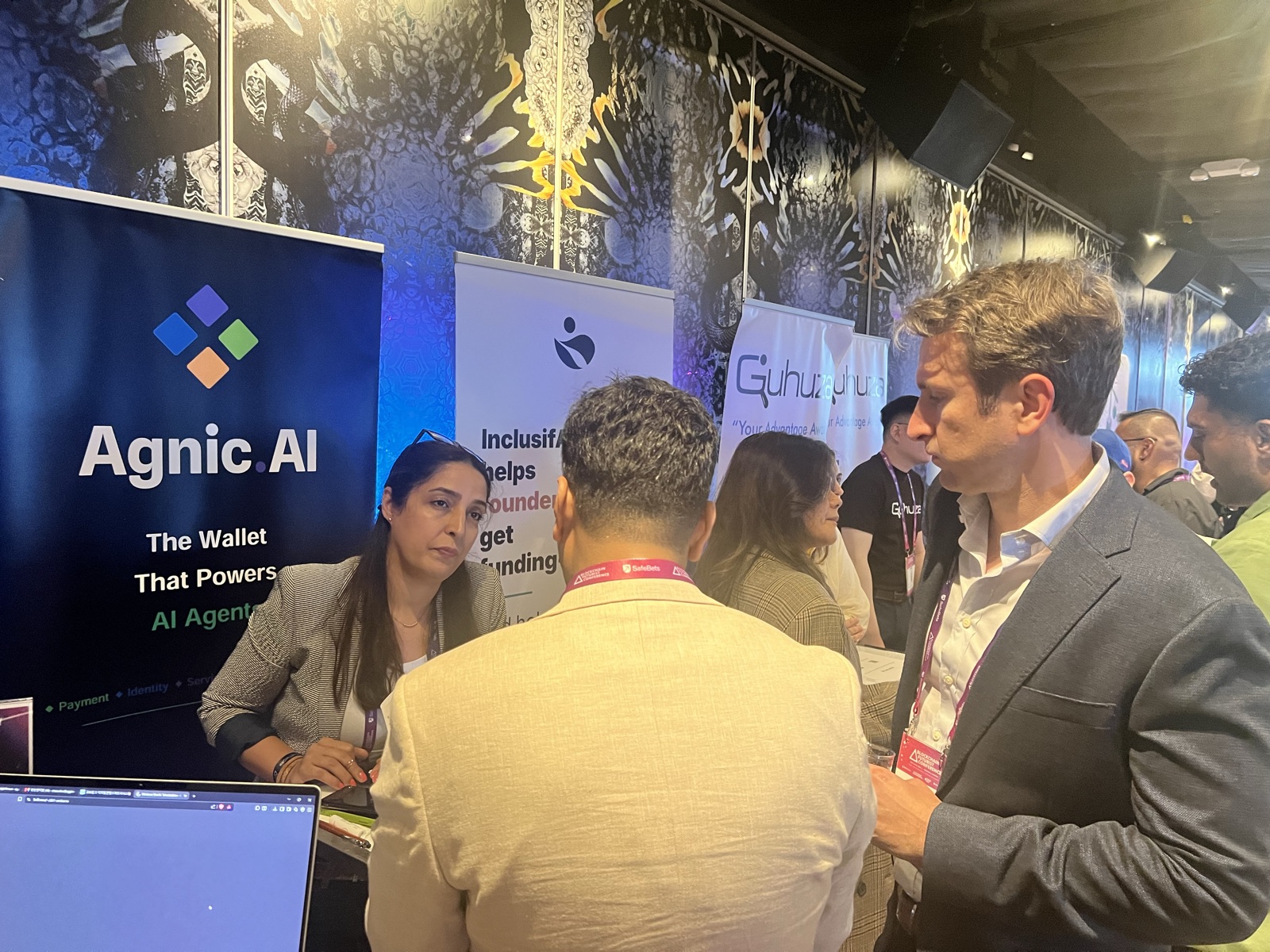
Agnic shared its booth with Obiscotti, a Toronto merchant and the first Canadian biscotti shop enabled for agentic commerce. The collaboration gave the booth a deliberately practical character: a local product, a real merchant, and a working agentic purchasing experience in one place.
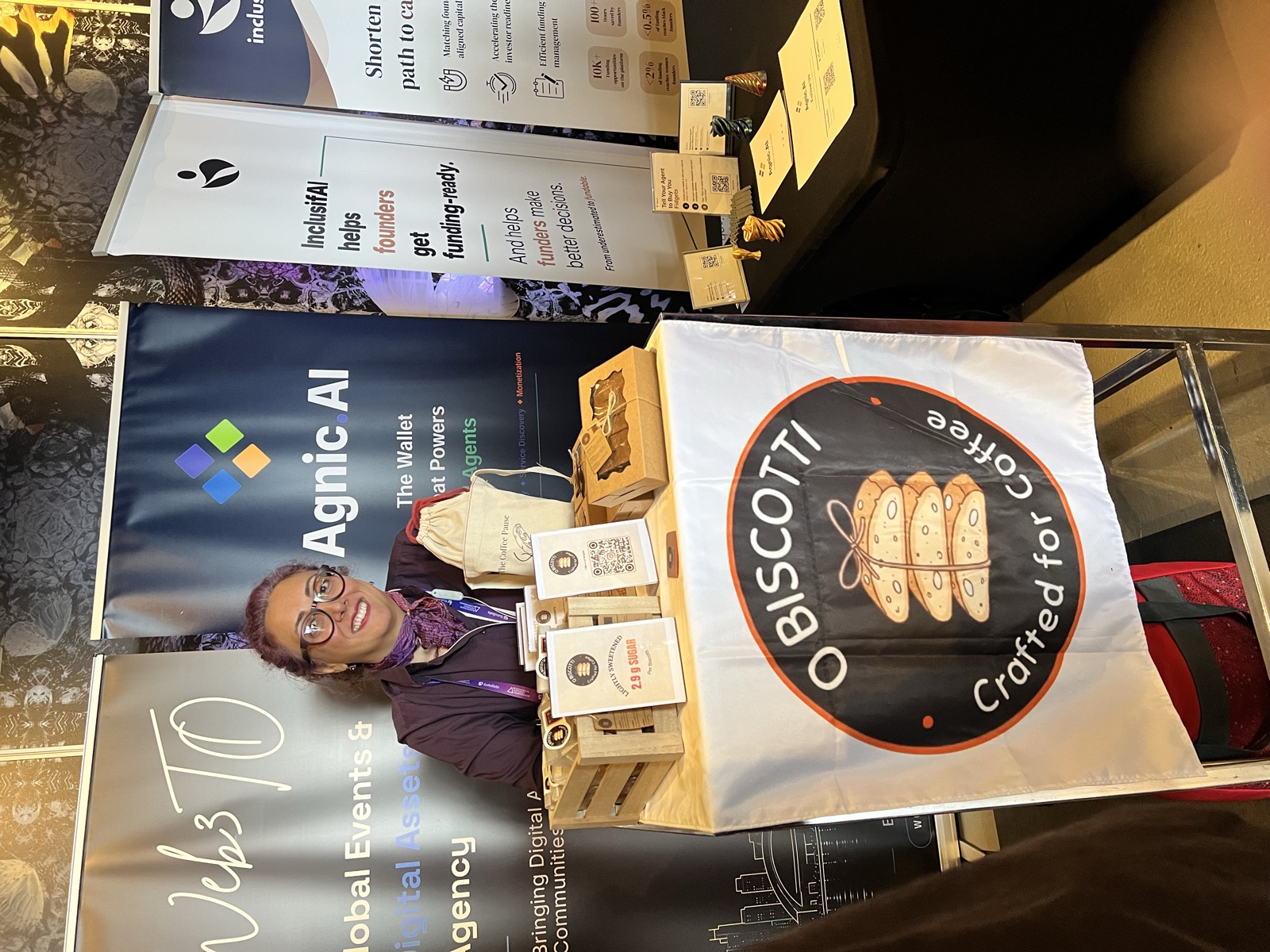
For visitors, this made the concept easier to understand than a conventional software demonstration. Agentic commerce was not presented as a distant enterprise architecture; it appeared as a familiar shopping journey redesigned for an AI buyer. Obiscotti also illustrated an important opportunity for small and medium-sized businesses. As consumer discovery shifts from search pages and social feeds toward AI assistants, merchants will need to make their products, policies, availability, and checkout capabilities legible to agents.
Shoplin in the Hands of Attendees
Shoplin served as the bridge between Agnic's infrastructure vision and the attendee experience. Booth visitors and workshop participants used the sample shopping agent to explore how an AI can move through a commerce journey while keeping the user involved at the appropriate points.
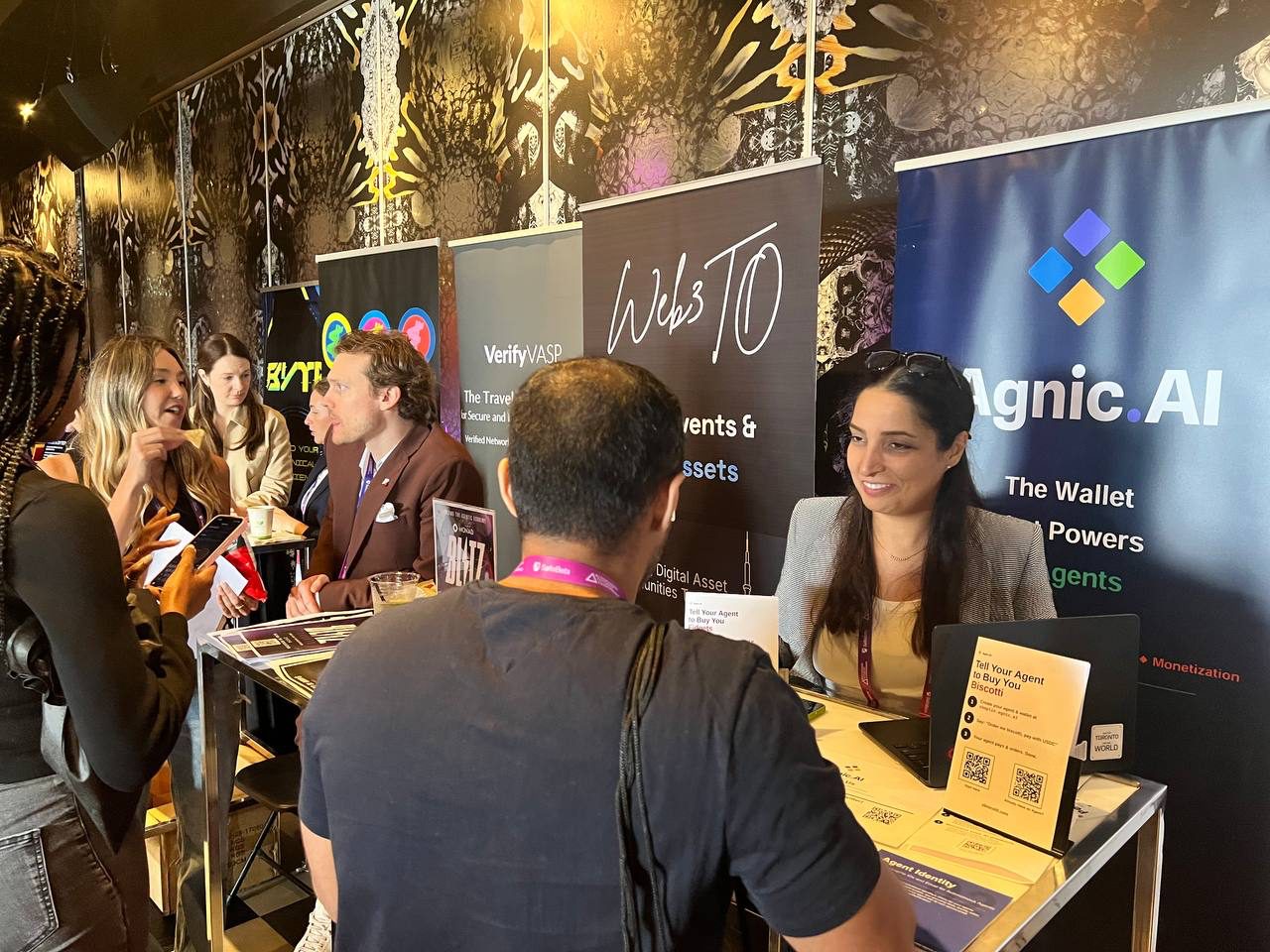
The demonstrations highlighted two realities at once. First, agent capabilities are expanding quickly: discovery, reasoning, service calls, wallet interactions, and checkout can now be assembled into usable flows far faster than even a year ago. Second, technical capability alone is not adoption. Users need confidence that an agent understands their request, respects boundaries, discloses what it is doing, and cannot spend or share data outside its mandate. Merchants need confidence that the agent, user, and payment are legitimate. Shoplin gave attendees a concrete way to see both the promise and the missing trust layer.
TheStreet Interview: AI's Challenge and Its Economic Upside
In an interview with TheStreet, Agnic discussed the next phase of AI through the paired lenses of trust and adoption.
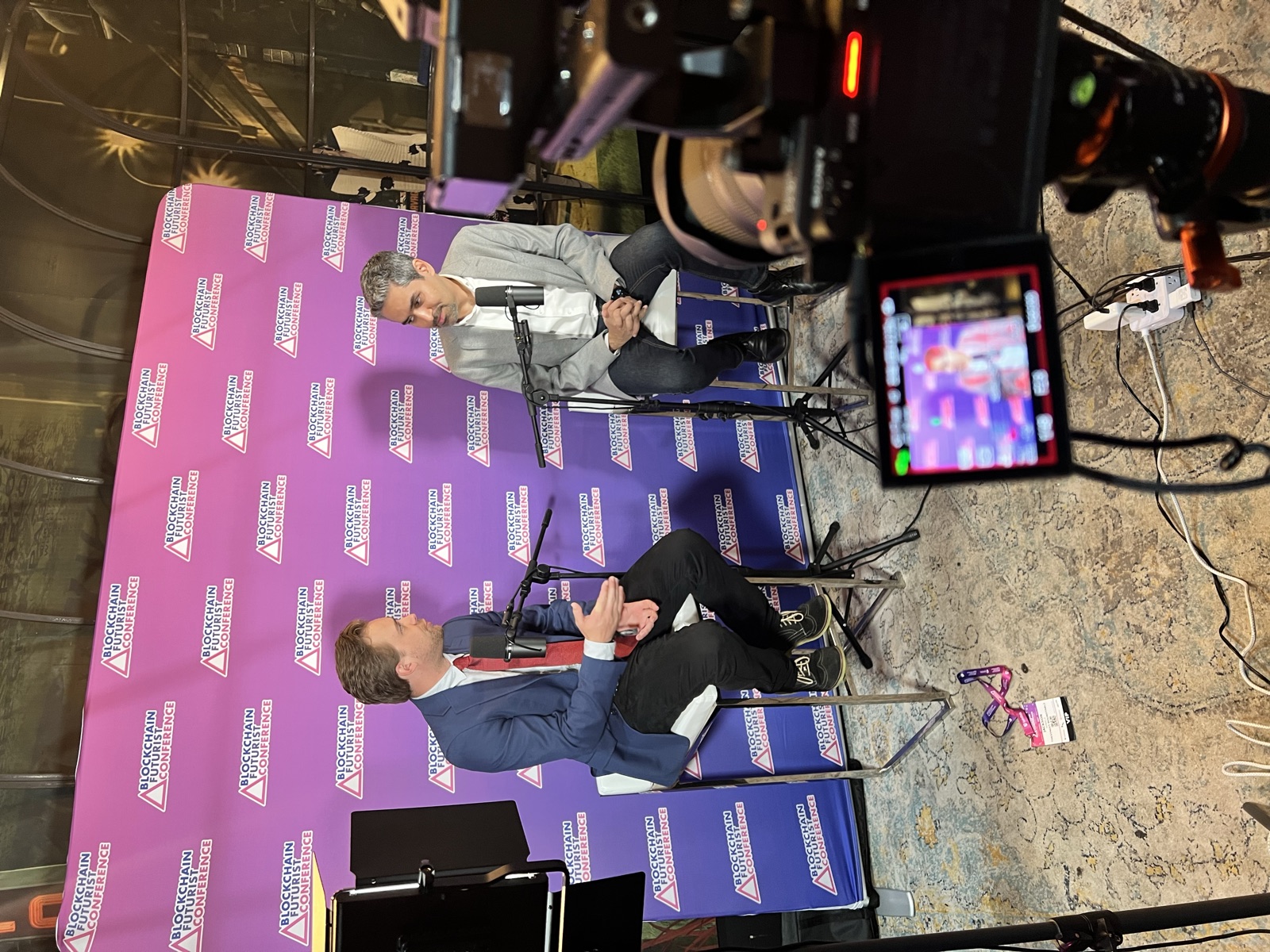
Trust is the foundational challenge. As AI shifts from producing content to taking action, mistakes can carry financial and operational consequences. Users and businesses will need mechanisms for identity, consent, delegated authority, policy enforcement, transaction limits, transparency, and recourse. In other words, the industry must be able to answer not only "What can this agent do?" but also "Who authorized it, what exactly was it allowed to do, and can its actions be verified?"
Adoption is the second challenge. Many agentic experiences remain too technical, fragmented, or unfamiliar for mainstream users and merchants. Adoption will depend on useful applications, simple interfaces, integration with existing systems, and trustworthy defaults. The technology becomes meaningful when people can use it without needing to understand the underlying protocols.
The opportunity, however, is considerably larger than automating today's tasks. As AI systems gain tools, memory, identity, and transaction capabilities, they can expand the effective capacity of individuals and organizations. New businesses will emerge to serve agents as customers; existing companies will redesign products for both human and machine buyers; and new jobs will grow around agent design, supervision, safety, compliance, integration, and optimization. AI may remove some repetitive work, but it will also create new layers of economic activity--and entirely new categories of services that are viable only when software can discover and purchase them autonomously.
What the Conference Debates Revealed
Two conference panels made the importance of Agnic's focus especially clear.
Trust in the Machine: Web3, Data Ownership & AI Governance
This AI Futurist panel moved beyond model performance and asked how autonomous systems can be trusted with sensitive data, decisions, and economic activity. The discussion covered privacy-preserving technologies, local AI, data cooperatives, decentralized identity, confidential computing, secure hardware, and the idea that users should be able to verify where and how computation occurs.
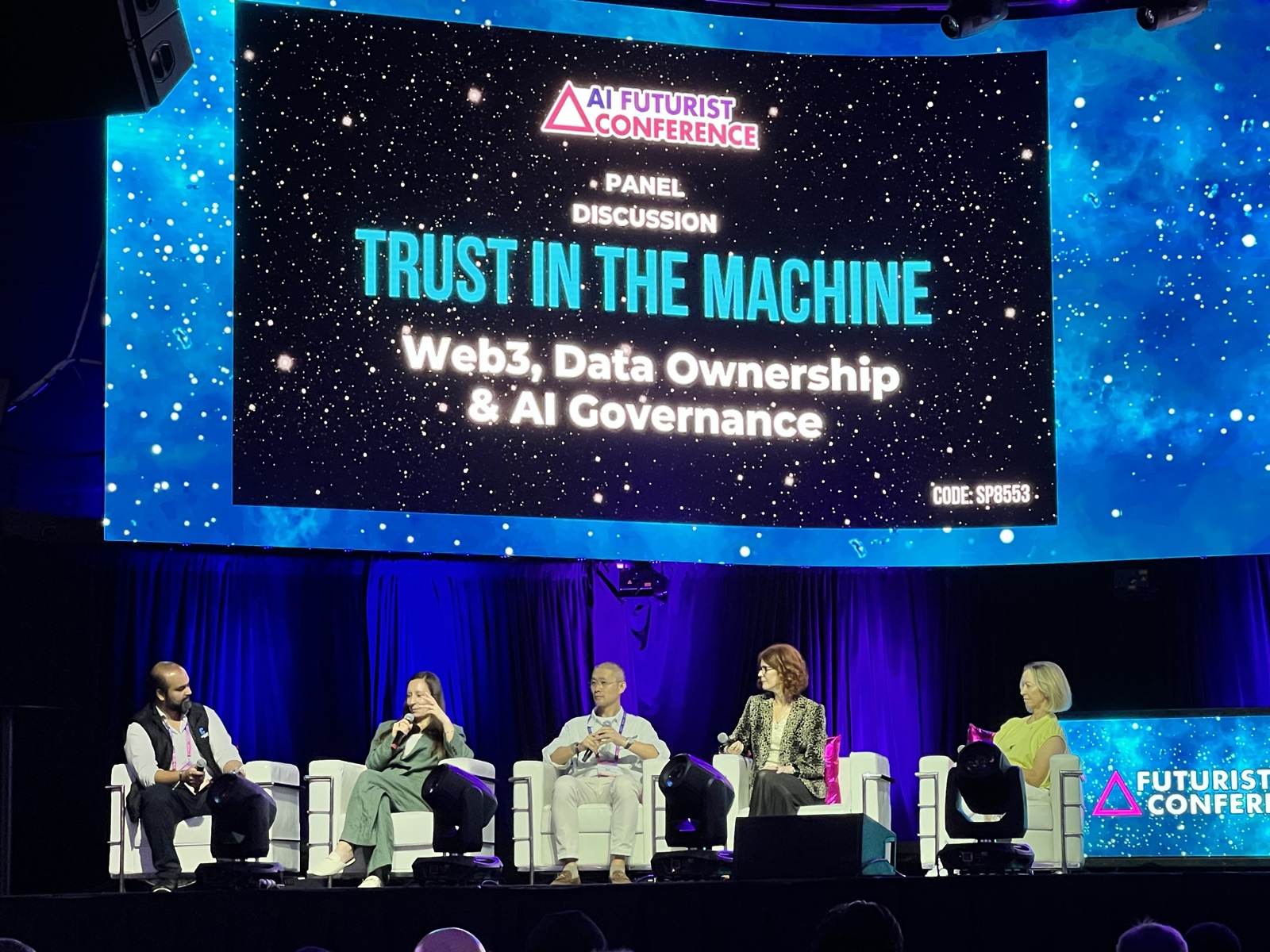
The panel's most important disagreement concerned where responsibility should sit. One view emphasized direct user control over data and infrastructure. Another argued that mainstream users should not be expected to become security experts; trust must be embedded in regulation, identity systems, and products that protect people by default. Both positions point to the same conclusion for agentic commerce: autonomy will scale only when authority and accountability are built into the system rather than added after deployment.
The session strongly addressed privacy, ownership, and governance, but spent less time on the operational mechanics of economic action. Once an agent can make a purchase, trust must extend into mandates, payment authorization, spending policies, merchant verification, transaction provenance, and recourse. That is precisely where the conversation about responsible AI meets Agnic's commerce infrastructure.
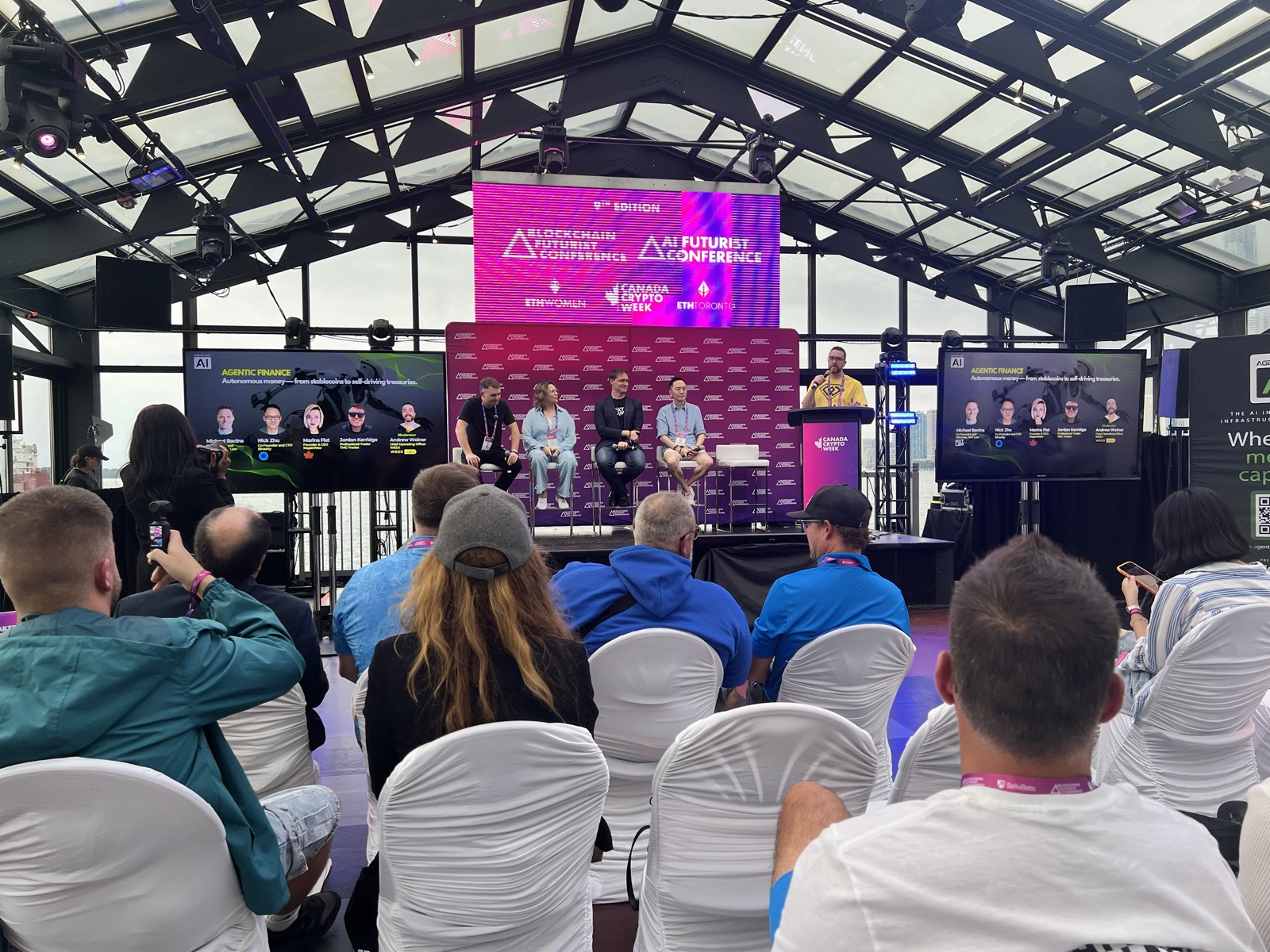
Autonomous Money: From Stablecoins to Self-Driving Treasuries
The Agentic Day panel examined AI-assisted trading, treasury workflows, legal liability, enterprise governance, and programmable finance. Speakers broadly agreed that AI can automate routine financial operations and dramatically increase productivity, while humans and organizations remain legally accountable for high-risk decisions. Stablecoins were positioned as a natural settlement layer for software-native finance.
The panel also exposed a gap between assisted automation and genuinely autonomous finance. It discussed agents making or proposing financial decisions, yet gave limited attention to how those agents would authenticate, prove delegated authority, obey spending limits, establish counterparty trust, and generate an auditable transaction history. Without these controls, a self-driving treasury is powerful but incomplete.
That omission was echoed in wider conference coverage. Leaders disagreed openly on timing: some expect stablecoin-powered agent payments to grow within months, while others believe real use at scale remains years away. Both perspectives can be true. The underlying capabilities are advancing rapidly, but adoption will depend on the trust and payment infrastructure that turns a compelling demonstration into a repeatable, accountable business process.
Agnic's Key Takeaway
Blockchain Futurist 2026 showed an industry entering a more intentional phase. AI and digital assets are converging around real operating problems: identity, privacy, programmable settlement, governance, compliance, and machine-scale commerce.
Agnic's workshop, booth, Shoplin demonstrations, and media conversation all reinforced one proposition: the next internet will not be used only by people clicking buttons. It will also be used by software acting on their behalf. To support that shift, agents must be able to discover businesses, establish trust, receive bounded authority, pay across appropriate rails, and leave an accountable record.
The future of agentic commerce will be determined not only by how intelligent agents become, but by whether people and businesses can confidently let them act. At Futurist, Agnic demonstrated both sides of that equation--the expanding capability of AI and the trust infrastructure required to move it into everyday commerce.
Sources and Further Reading
See the same agentic commerce stack live — give your agent a wallet and try Shoplin.
Learn more →